Ireland is famous for green hills, lively pubs and fairytale castles. But anyone who has spent time here knows the country’s story has a darker thread running through it: famine and emigration, rebellion and imprisonment, ancient beliefs about death, and more ghost stories per square mile than almost anywhere in Europe. Visiting the places tied to those stories has a name, dark tourism, and it is one of the most rewarding ways to understand Ireland properly.
Our Director of Sales, Luisa Golz, recently joined Jody Halsted on the Traveling in Ireland podcast (Episode 353) to talk about exactly this. Luisa’s PhD research looked at festivals built around dark themes, and she now uses that knowledge every day when planning private itineraries for our guests. This guide builds on that conversation.
🎧 Listen to the episode: Dark Tourism in Ireland: Famine Sites, Ghost Tours and Thin Places on the Traveling in Ireland podcast.
What Is Dark Tourism?
Dark tourism simply means travelling to places connected with death, tragedy, suffering or the macabre. The term was coined by academics in the 1990s, but the instinct behind it is ancient. People have always been drawn to the places where history was hardest. Crucially, not all dark tourism is equally dark. At one end sit famine memorials, workhouses, prisons and battlefields, places of real loss that ask for quiet reflection. At the other end are ghost walks, gothic castles, folklore and Halloween festivals, where the darkness is wrapped in storytelling and fun. Knowing where a site sits on that spectrum is the first step to planning a trip that feels balanced rather than bleak.
Why Travellers Are Drawn to Ireland’s Darker Side
Part of the pull is what researchers call locational authenticity: the feeling of standing in the exact place where something happened. Reading about the Great Famine is one thing; stepping below deck on a famine ship and feeling how low the ceilings are is another. For many of our North American guests there is a personal reason too. A great-great-grandparent who left Ireland in the 1840s is often just a name on a family tree until you visit the landscape they left behind. Dark tourism turns dates into people, and that is why it so often becomes the most memorable part of a trip.
Great Famine Sites Worth Visiting
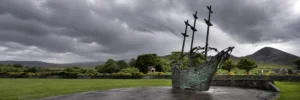
The Great Famine (1845 to 1852) reshaped Ireland, and its traces are found across the island. The National Famine Museum at Strokestown Park in Co. Roscommon is the best place to begin for historical context. The Dunbrody Famine Ship in New Ross, Co. Wexford, and the Jeanie Johnston on Dublin’s quays bring the emigrant crossing to life, while the Irish Workhouse Centre in Portumna, Co. Galway, shows the grim reality of the workhouse system. In Co. Donegal, Doagh Famine Village tells the story through small, human details, like a simple table showing the meagre foods a family might have lived on, a display Luisa singled out on the podcast. Most powerful of all may be the Doolough Famine Memorial in Co. Mayo, which marks the 1849 walk made by starving people between Louisburgh and Delphi in search of relief. Some never made it home. The valley is breathtakingly beautiful, and that contrast is exactly what makes it so affecting.
Gaols, Rebellion and Ireland’s Fight for Freedom
Ireland’s prisons tell the story of rebellion, punishment and transportation. Kilmainham Gaol in Dublin, where leaders of the 1916 Easter Rising were executed, is one of the most visited sites in the country, and Glasnevin Cemetery nearby is the resting place of many figures from that era. Wicklow’s Historic Gaol explores the 1798 Rebellion and convict transportation to Australia, Cork City Gaol offers an atmospheric look at nineteenth century prison life, and Spike Island in Cork Harbour, once a monastery, fortress and convict depot, makes a superb half-day trip. North of the border, Crumlin Road Gaol and a Black Taxi Tour of Belfast offer an insight into the Troubles that is thoughtful rather than sensational when done with a good guide.
Haunted Castles and Ghost Stories
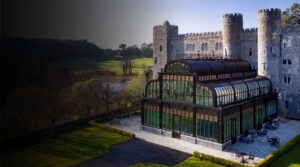
This is the lighter, more playful end of dark tourism, and it happens to be something we know a great deal about. Ireland’s castles have witnessed sieges, murders and family feuds for eight centuries, so it is no surprise so many come with a resident ghost. Leap Castle in Co. Offaly is often called the most haunted castle in Ireland, and Malahide, Charleville and Kinnitty all have their own legends. We cover the best of them in our guide to Ireland’s Most Haunted Castles, and if you want to experience them properly, our Haunted Castles & Ghost Stories Tour is a five-day private route built around them. For a spooky night’s sleep, Kinnitty Castle in the Slieve Bloom Mountains is a gothic castle hotel with a haunted reputation (be warned, there is no lift). You’ll find more options like it in our round-up of Ireland’s Best Castle Hotels.
Kilkenny: Medieval Streets and Dark History
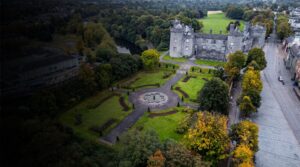
Few places blend history and eeriness as well as Kilkenny. The city’s medieval lanes are the backdrop for evening ghost tours full of witchcraft trials and local legend, and about twenty minutes away lies Dunmore Cave, a dramatic limestone cave where the medieval annals record a Viking massacre in the tenth century. Knowing that story transforms the experience of walking inside. Read our Kilkenny Medieval Castle City Guide for the full picture, or see our private day tour of medieval Kilkenny from Dublin.
Samhain, Halloween and Ireland’s Autumn Festivals
Halloween began here. Its roots lie in Samhain, the ancient Celtic festival marking the start of winter, when the boundary between this world and the Otherworld was believed to grow thin. Today Ireland celebrates that heritage with events such as the Púca Festival in Co. Meath, Derry Halloween, one of Europe’s biggest Halloween celebrations, and Dublin’s Bram Stoker Festival, honouring the Dubliner who wrote Dracula. There is a practical bonus for travellers too: by late October the summer crowds have gone, the light is low and golden, and the whole country takes on a moodier atmosphere. An autumn private tour timed around Halloween is one of our favourite trips to plan.
Ireland’s “Thin Places”
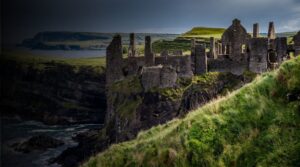
A thin place is somewhere the gap between the physical and spiritual worlds feels especially narrow. It is hard to define and easy to feel. On the podcast, Luisa pointed to the Grange Stone Circle at Lough Gur in Co. Limerick and the Rock of Dunamase in Co. Laois as two places where the idea fits perfectly. Neither needs a ghost story. Add an early November mist and a little fading light, and the atmosphere does the work. Dunamase also features in our guide to the Ruined Castles of Ireland, alongside other atmospheric fortresses whose stories stretch back to the Norman invasion.
How to Visit Dark Tourism Sites Respectfully
The best advice is simple: know where you are. A few minutes of reading before you arrive changes how you experience a site, and it changes how you behave there. Slow down, and don’t treat a memorial like a photo stop. At Glendalough, for example, some graves are marked with flat stone slabs that are easy to mistake for paving, and visitors walk across them without realising. Nobody means any disrespect; they just don’t know what they are looking at. A good local guide closes that gap, pointing out the details you would miss and explaining the traditions behind them. For families, match the site to the children. A ghost walk may be a highlight for a ten-year-old, while a famine memorial may need more preparation. For further reading, Luisa recommends The Darkness Echoing by Gillian O’Brien.
Exploring Ireland’s Darker History on a Private Tour
Most travellers don’t want an entire holiday of dark sites, and we wouldn’t recommend one. The magic is in weaving one or two meaningful stops into a wider itinerary: a famine ship on the way to the Wexford coast, a ghost walk after a day at Kilkenny Castle, a quiet hour at Doolough on a west of Ireland loop. That is exactly what a private driver-guide does best. Your guide can reach the rural sites public transport can’t, give each place the context it deserves, and balance heavier history with lighter moments so the trip never feels gloomy. Explore our Castle Tours for inspiration, or talk to Luisa and the team about a fully private tour of Ireland built around the stories that interest you. We offer free itinerary consultations; just email sales@desmondtours.com.
Frequently Asked Questions About Dark Tourism in Ireland
What is dark tourism in Ireland?
It is travel to Irish sites connected with death, tragedy or the macabre, from famine memorials and historic gaols to haunted castles, ghost tours and Halloween festivals.
What are the best dark tourism sites in Ireland?
Popular choices include Kilmainham Gaol, the National Famine Museum at Strokestown, the Dunbrody Famine Ship, Spike Island, the Doolough Famine Memorial, Leap Castle and Kilkenny’s ghost tours.
Is dark tourism in Ireland suitable for children?
It depends on the site and the child. Ghost tours and Halloween festivals suit many families, while famine and prison sites may need more preparation for younger children.
When is the best time for dark tourism in Ireland?
Late October is ideal. Crowds are lighter and festivals such as Púca, Derry Halloween and the Bram Stoker Festival celebrate Ireland’s Samhain heritage.
Can Desmond Tours include dark tourism sites in a private tour?
Yes. Every Desmond Tours itinerary is private and tailored, so famine sites, haunted castles, ghost tours and thin places can all be woven into your route. Contact sales@desmondtours.com for a free consultation.